 Skip to content
 French Press techniques unveiled! Learn how to brew rich coffee with precision. Enhance your skills and savor every sip with our ultimate guide.
French Press Ratio Calculator
Find your perfect coffee strength with visual ratio guidance for optimal French press brewing
Why ratio matters: French press requires a stronger ratio than pour-over due to metal filtration and full immersion. The ideal range is 1:12 to 1:15 (coffee:water). Stronger ratios (lower numbers) give bold, heavy-bodied coffee while lighter ratios (higher numbers) produce brighter, cleaner cups.
Ratio Visualization
Brewing Strength Guide
Discover the art of brewing coffee with a French Press in this comprehensive guide. Learn about the importance of coffee-to-water ratios, the immersion brewing technique, and how various factors like grind size and water temperature affect flavor. Master the science behind extracting rich aromatic coffee and customize your brewing experience to match your personal taste preferences This guide also compares French Press with other methods like pour-over and espresso, ensuring you can explore and elevate your coffee-making skills. Enjoy each cup while deepening your appreciation for coffee

Introduction to French Press Brewing
The French Press is a distinctive brewing method that has gained significant popularity among coffee enthusiasts around the world. Its charm lies in the simplicity and the hands-on approach it offers, allowing users to experience the full depth of flavor that the coffee beans can provide. Unlike other brewing techniques, the French Press utilizes a metal filter rather than paper enabling the essential oils from the coffee grounds to remain in the final cup. This results in a richer and more complex flavor profile, making it a favored choice for those seeking a robust coffee experience
One of the defining characteristics of French Press brewing is the full immersion technique. When using a French Press, coffee grounds are steeped in hot water allowing them to release their flavors more thoroughly compared to methods that require rapid water movement. This approach not only enhances the taste but also allows for a personalized brewing time giving users the ability to experiment with different steeping durations to achieve their preferred strength and flavor. The direct contact of coffee with hot water permits the extraction of a wide array of aromatic compounds, which contributes to the overall richness of the brew.
A key concept in achieving the perfect cup lies in understanding coffee-to-water ratios. The ratio plays a crucial role in determining the strength and flavor of the final brew. Adjusting the coffee-to-water ratio can influence both the intensity and complexity of the flavors extracted during brewing. A higher ratio might yield a bolder taste, while a lower ratio typically results in a milder brew Consequently, utilizing a French Press Ratio Calculator can be immensely beneficial, as it allows enthusiasts to refine their brewing process, ensuring each cup of coffee aligns with their specific flavor preferences and desired strength.
Understanding Coffee Ratios
Coffee ratios are fundamental in the brewing process, commonly expressed as the proportion of coffee grounds to water This ratio, typically conveyed as a simple fraction or decimal, significantly influences the final cup’s flavor, strength, and body. A prevalent guideline among coffee enthusiasts is the “golden ratio,” which suggests using one to two tablespoons of coffee for every six ounces of water; however, individual preferences may vary. Understanding this ratio aids in achieving optimal extraction during the brewing process, enhancing the overall coffee experience.
The science behind coffee extraction involves the dissolution of soluble compounds from the coffee grounds when mixed with hot water. Proper extraction is essential to unlock the complex flavors and aromas inherent in the beans. If the coffee-to-water ratio is too low, the resulting brew may taste weak or sour, as the water fails to extract enough flavor compounds. Conversely, an excessively high ratio can lead to over-extraction, resulting in an overly bitter and harsh taste. Consequently, striking the right balance is crucial for a well-rounded cup of coffee
Water chemistry also plays a vital role in coffee extraction. The mineral content of the water can affect how flavor compounds behave, influencing the final taste profile. For instance, water with a higher calcium content can enhance extraction, resulting in a more robust flavor. Additionally the grind size of the coffee beans is of paramount importance. Finer grinds facilitate quicker extraction, whereas coarser grinds result in slower extraction rates, impacting the overall strength and body of the brew. Thus, adjusting both the coffe to water ratio and the grind size can significantly alter the final taste, ensuring that each coffee enthusiast can find their preferred brew.
Why Ratio Matters in French Press Brewing
Achieving the ideal coffee-to-water ratio is a fundamental aspect of brewing with a French press. This method of coffee preparation utilizes an immersion process, where coffee grounds are steeped in water, allowing for a full-bodied extraction of flavors. Unlike pour-over methods that rely on gravity for extraction the French press’ metal filter permits more oils and fine particles to pass through into the brew This immersion technique, coupled with the design of the filter, means that extracting flavors efficiently hinges on the right balance between coffee and water.
The recommended coffee-to-water ratio for French press brewing typically ranges from 1:15 to 1:17, depending on personal taste preferences. A more concentrated brew may benefit from a 1:15 ratio while a diluted coffee might fall closer to the 1:17 ratio. Each ratio significantly impacts the strength and flavor profile of the finished produc If the coffee grounds are under-extracted due to insufficient water, the resulting brew may taste sour or lack depth Conversely, over-extraction due to too much water can lead to bitter flavors that overshadow the coffee’s natural nuances.
French press brewing uniquely allows for a richer mouthfeel and complexity, which necessitates careful attention to the balance of ingredients. It is essential to remember that water temperature also plays a critical role in the extraction process, further complicating the brewing equation. Therefore, finding an optimal coffee-to-water ratio is crucial; it fine-tunes the extraction and enhances the overall sensory experience The goal remains not just to brew coffee, but to elevate it into a delightful experience. By mastering the right ratio, coffee enthusiasts can unlock a wealth of flavors characteristic of French press coffee.
Ideal French Press Ratios Explained
When brewing coffee with a French Press, understanding the ideal coffee-to-water ratio is crucial for achieving the desired flavor profile and body. The general range for French Press coffee ratios falls between 1:12 and 1:15. This means for every one part of coffee, you should use 12 to 15 parts of water Thus, if you decide to use a standard recommendation of a 1:15 ratio, for every gram of coffee, you would use 15 grams of water.
The interpretation of these ratios can significantly influence the taste and experience of your brew. Lower ratios, such as 1:12, tend to produce bolder, more intense coffee. This ratio emphasizes the robust flavors of the coffee beans, resulting in a heavier-bodied drink that is often rich and full of texture. On the other hand, higher ratios like 1:15, yield a cup that is typically brighter and cleaner. The flavors become more refined, allowing the subtleties of the coffee to shine through while minimizing a syrupy mouthfeel
Each user’s preference will dictate which ratio to use. If you enjoy a strong, heavy-bodied cup, experimenting with ratios closer to 1:12 may suit your taste. Conversely, if you prefer a more delicate and nuanced brew, a ratio nearer to 1:15 will likely align with your preference It is also worth noting that factors such as the grind size of the coffee, steeping time, and even the type of beans can further influence the overall brewing experience and results. Therefore, considering these ratios as a starting point allows for customization and experimentation until the ideal French Press coffee is achieved
Using the French Press Ratio Calculator Effectively
The French Press ratio calculator serves as an essential tool for brewing the perfect cup of coffee. To effectively utilize this calculator, one must first understand the fundamental variables involved in brewing: coffee weight, water volume, and preferred strength. The process begins by determining the amount of coffee you wish to use. A common starting point is a coffee-to-water ratio of 1:15, meaning for every gram of coffee, you would use 15 grams of water. However, this can be adjusted depending on your taste preference for stronger or lighter brews.
Once you have decided on the coffee weight, the next step is to input the water volume. For example, if you’re using 30 grams of coffee, you will multiply that by your desired water ratio. In this case, for a 1:15 ratio, you would use 450 grams of water. It is essential to accurately measure both the coffee and water; precision can significantly impact the flavor profile of your brew.
After inputting these variables, the calculator will generate a recommended brewing strength based on your parameters. However, brewing coffee is also an art. Feel free to experiment with different ratios beyond the suggested guidelines, such as a stronger 1:12 ratio or a milder 1:18 ratio, to discover the flavor nuances that suit your palate. Documenting your experiments can help identify specific preferences over time, leading to a personalized brewing routine.
Additionally, consider other factors that can influence your coffee experience, such as grind size and brew time. Adjusting these elements alongside the French Press ratio will enable you to refine your methods and achieve that perfect brew you desire Embrace the opportunity to explore and develop your coffee-making skills, as each cup brewed brings you closer to finding your ideal coffee experienc
Adjusting Ratios for Personal Preference
When it comes to brewing coffee using a French press, one-size-fits-all approaches often fall short. Each individual has unique taste preferences that can significantly influence the ideal coffee-to-water ratio To achieve a perfect brew, it is essential to understand how to adjust these ratios based on various factors, including coffee type, roast level, and personal flavor profiles.
Firstly, the type of coffee beans you select plays a crucial role in your brewing experience. Different varieties, such as Arabica and Robusta, have distinct taste characteristics. Arabica beans are typically smoother and more nuanced, whereas Robusta beans tend to be bolder and earthier For lighter coffee types like Arabica consider starting with a ratio of 1:15 (one part coffee to 15 parts water). For bolder varieties like Robusta, a 1:12 ratio can enhance the strong flavors, providing a fuller-bodied cup.
Moreover, roast levels can also affect how you adjust your French press ratios. Light roasts often highlight bright acidity and floral notes, requiring slightly less coffee to maintain balance, while dark roasts bring out richer smoky flavors and may benefit from a more concentrated brew. Experimenting with ratios anywhere from 1:14 to 1:16 for light roasts, and 1:11 to 1:13 for dark roasts allows you to find what complements the individual characteristics of your chosen coffee.
Other factors, such as brewing time and water temperature, also play a significant role in the final outcome. Brew times typically range from four to five minutes, depending on desired strength Higher temperatures can extract flavors more quickly but can also lead to unwanted bitterness. For optimal results, aim for water temperatures between 195°F and 205°F. By taking these variables into account, you will be well equipped to craft a personalized coffee experience that aligns with your individual taste preferences.
Common Mistakes When Brewing French Press
Brewing coffee using a French press can yield a rich and flavorful cup, but several common mistakes often hinder new users from achieving their desired outcome. One of the most significant pitfalls is not adhering to the correct coffee to-water ratio. The proper ratio is crucial, as it directly influences the strength and taste of the coffee. Using too much coffee can lead to an overly bitter and intense flavor, while insufficient coffee may result in a weak, watery brew.
Another frequent error is the grind size of the coffee. For optimal extraction, it is essential to use coarse coffee grounds. Finer grounds can clog the filter and create a muddy texture, while also leading to over extraction, resulting in bitterness. When adjusting grind sizes, it is essential to strike a balance that allows for effective brewing without compromising flavor.
Furthermore, water temperature plays a critical role in the brewing process. Many new users underestimate the importance of using water that is neither too hot nor too cold. The ideal brewing temperature ranges between 195°F and 205°F (90°C to 96°C). Water that exceeds this range can scald the coffee producing unpleasant flavors, while cooler water may not extract the essential oils and compounds effectively.
Timing is also vital when using a French press. Allowing the coffee to steep for too long can result in over-extraction, leading to an undesirable taste Typically, a brewing time of four minutes is recommended This duration provides enough time for the coffee to release its full flavor profile without becoming bitter.
Lastly, once the brewing time has elapsed, it is crucial to plunger the coffee promptly. If left sitting in the ground coffee, it can become bitter and astringent. By addressing these common mistakes and refining technique new users can significantly enhance their French press brewing experience and enjoy a perfectly brewed cup of coffee.
Comparing French Press to Other Brewing Methods
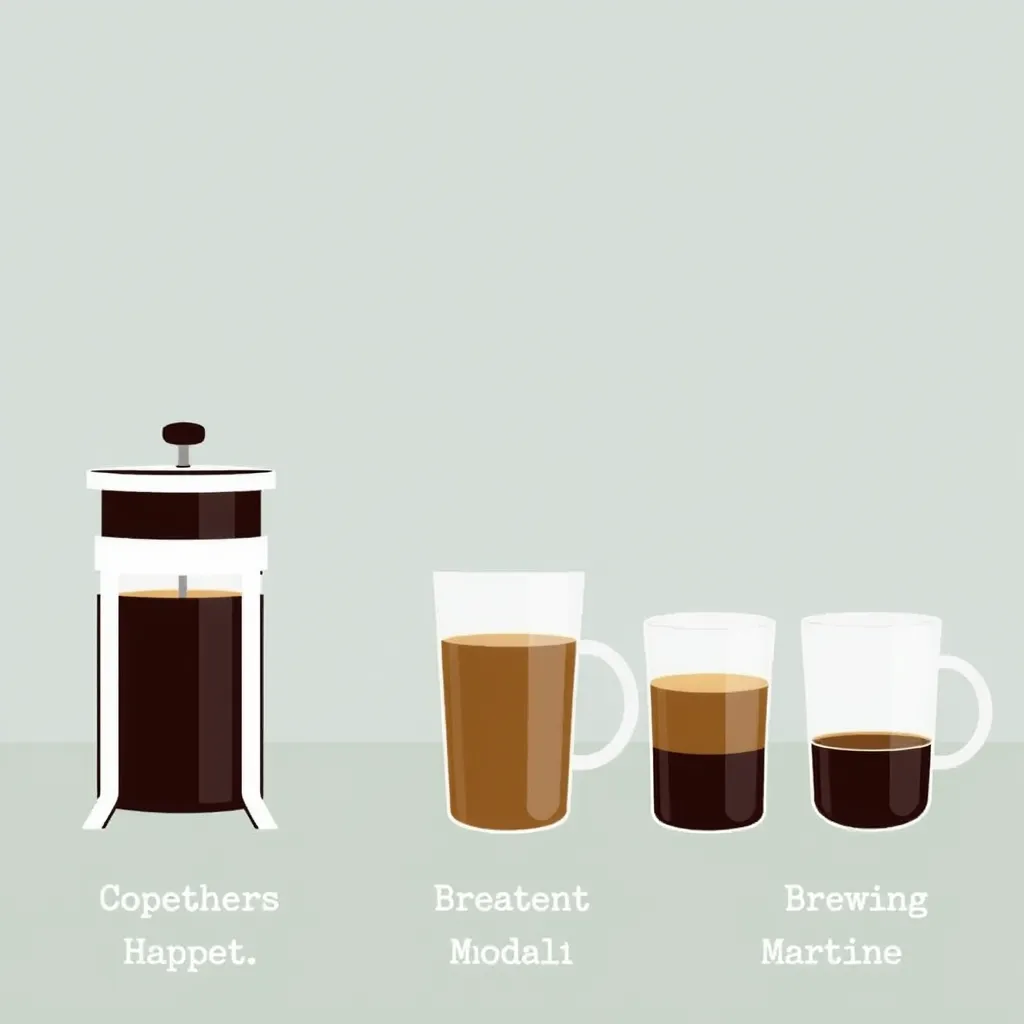
The French press is a popular coffee brewing method, celebrated for its ability to produce a rich and full-bodied cup. However, it is essential to understand how it compares to other brewing methods specifically pour-over and espresso, each renowned for unique flavors and characteristics. One of the most striking differences lies in the brewing ratios and extraction techniques, which significantly influence the coffee’s final taste profile.
When utilizing a pour-over method, the coffee-to-water ratio generally falls between 1:15 to 1:17. This allows for a cleaner cup with pronounced clarity, as the water gently extracts flavors as it passes through the grounds The pour-over technique grants impressive control over the brewing process, permitting baristas and enthusiasts to manipulate variables such as water temperature, grind size, and pouring speed which can lead to intricate flavor profiles.
In contrast, espresso requires a much finer grind and a coffee-to-water ratio of roughly 1:2, resulting in a concentrated shot with intense flavors and a thick crema. This method utilizes high pressure to extract the coffee quickly typically under 30 seconds, leading to a distinct body and vibrant flavor characteristics, often favored in various coffee beverages, including lattes and cappuccinos.
What sets the French press apart is its immersion brewing technique, where coffee grounds steep in boiling water for several minutes before being separated by pressing a metal or plastic plunger through a mesh filter The ideal ratio for French press is typically around 1:12, promoting a strongly brewed coffee with a robust flavor and heavier body. The extended steep time allows for maximum extraction of coffee oils and flavors, which can sometimes lead to a slightly more sediment-rich experience.
Ultimately, each brewing method has its merits, and exploring these differences can help coffee lovers discover their preferred taste Experimenting with various ratios and techniques will enhance the coffee experience, providing opportunities to find the perfect brew that suits individual palates
Conclusion: The Art of Crafting Your Perfect Brew
Ultimately, mastering the coffee-to-water ratio in French Press brewing is essential for achieving a well-balanced and flavorful cup of coffee. The significance of this ratio cannot be overstated as it directly influences the extraction process and the overall taste profile of the beverage. By understanding the science behind these measurement coffee enthusiasts can refine their brewing techniques to cater to their unique preferences.
It is important to remember that finding your ideal brew ratio may require some experimentation. Different coffee beans, varying grind sizes, and diverse brewing times can all contribute to the final flavor or experience of each cup. Therefore, users are encouraged to embrace the trial-and-error process adjusting the ratio as needed to discover what satisfies their palate best This journey of refinement not only enhances your coffee-making prowess but also deepens your appreciation for the intricacies of brewing.
Moreover, sharing your experiences with others who share your interest in coffee can foster a sense of community. Discussions about individual variations in coffee-to-water ratios can lead to new insights and recommendations that you might not have considere Engaging with fellow coffee lovers can also provide motivation to continue improving your skills and experimenting with different brewing methods.
In conclusion, achieving the perfect cup of coffee is undeniably a blend of both science and art. By honing your understanding of the French Press ratio calculator and continually seeking to improve your technique you can elevate your coffee experience. Remember, the journey to your ideal brew is just as important as the destination, so savor each cup you create!
